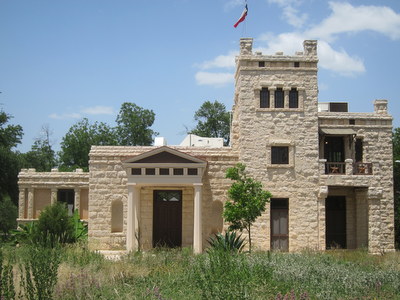
The Contemporary Austin at Laguna Gloria

DSC02878

The Contemporary at Laguna Gloria is located west of downtown Austin at the end of West 35th Street. When I last visited, this location was called the Austin Museum of Art (AMOA). A few years ago, AMOA merged with downtown’s Arthouse at the Jones Center to form a new entity, The Contemporary Austin. The Laguna Gloria site now focuses on outdoor sculpture and art installations and is home to The Art School.

Continue reading

Harry Ransom Center

 DSC03364

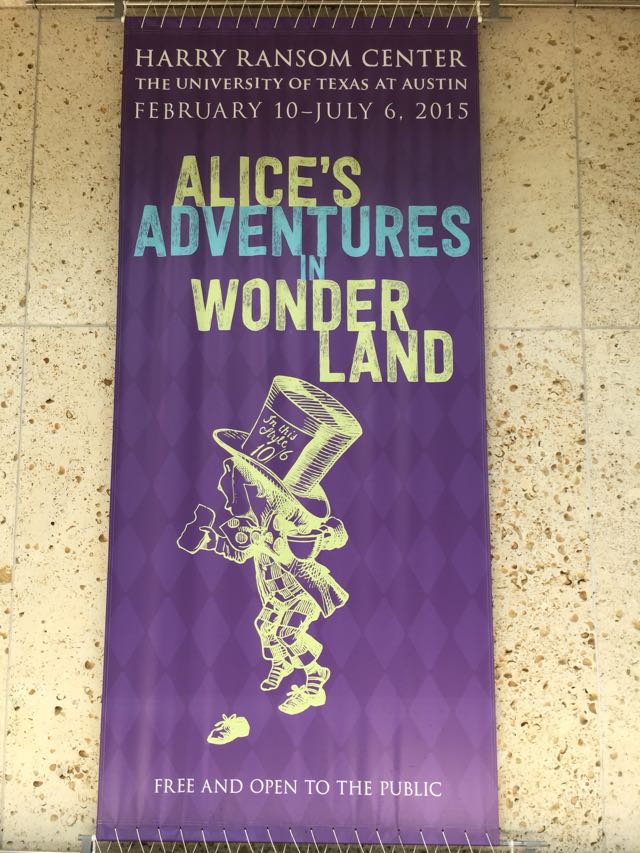
The mission of the Harry Ransom Center is to “advance the study of the arts and humanities.”  Located on the west side of the University of Texas campus, the Ransom Center is primarily an archive and library. The first floor is open to the public and features  two small permanent exhibits: a Gutenberg Bible is on display, one of five complete copies in the US, and also the first photograph, taken in France in 1826 or 1827. Larger, rotating exhibits are assembled from the Center’s extensive collection. Two of my recent favorites have been Radical Transformation: Magnum Photos into the Digital Age and The King James Bible: Its History and Influence.

Continue reading

Umlauf Sculpture Garden & Museum

DSC02329

The Umlauf Sculpture Garden and Museum lies just east of Zilker Park and the Barton Springs Pool. In 1985, sculptor Charles Umlauf and his wife Angeline gifted this property and 168 sculptures to the City of Austin. Six years later, a garden and gallery building were built in the lower section. Their house on top of the hill has been restored and is available for private events. Both the house and his studio will be opened to the public in the near future.

Continue reading

Austin Museum Day – Downtown: 2012

After visiting the East Austin museums during last Sunday’s Austin Museum Day, I headed downtown to check out three unusual sites…

I first stopped by the Byrne-Reed House on Rio Grande Street, headquarters for Humanities Texas. As the state affiliate of the National Endowment for the Humanities, this non-profit “conducts and supports public programs in history, literature, philosophy, and the other humanities disciplines.” Humanities Texas administers a grants program, creates traveling exhibitions and conducts various educational programs.

The current exhibit is Benjamin Franklin: In Search of a Better World. But I must confess that I spent more time admiring the house than reading the exhibit panels. I learned that the Byrne-Reed House was built as a family home in 1907 but was turned into an stucco-covered offering building in 1969. Humanities Texas purchased the building in 2006 and  recently completed an award-winning restoration project .

Next on my itinerary was the Texas Medical Association History of Medicine Gallery. I have driven past this corner of Guadalupe and 15th Street many, many times but wasn’t aware of this little museum in the first floor lobby.

The current exhibit, Don’t Spit on the Sidewalk, describes the top 10 public health achievements of the last century, including vaccination, motor vehicle safety, and fluoridation of drinking water. The exhibit’s name comes from sidewalk bricks which were laid to help control infectious diseases. This “museum” wasn’t big but the displays were informative and I was glad that I had stopped by.


Last stop on my downtown museum tour was the German Free School, tucked away on the 10th Street hillside near Red River. I’ve been to concerts next door at The Mohawk, but had absolutely no idea that this beautiful historic building was behind the trees. The folks in the School probably know about their noisy neighbors at The Mohawk though.

Friendly members of the German-Texas Heritage Society explained the property’s history. German immigrants started the school in 1858, which predated the Austin public school system by 20 years. Classes were “free” of religious instruction and taught in both English and German. After the school closed in 1881, the property changed hands several times before being purchased in 1948 by a deaf artist, Kelly H. Stevens. Stevens bequeathed the building and grounds to the German-Texas Heritage Society when he died in 1991. Some of Stevens paintings are on display inside. 
German classes are offered here for both adults and children. The Society sponsors events such as Oktoberfest, Christmas Market, and monthly German Film Nights. The German Free School is also available for small wedding receptions and parties.
Austin Museum Day – East Austin: 2012

Thirty-six area museums participated in Sunday’s Austin Museum Day. I took advantage of this free admission day to visit several museums in East Austin…

The George Washington Carver Museum & Cultural Center “collects, preserves, interprets and exhibits materials and artifacts which document the rich history of persons of African descent on a city, county, state, national and international level.” The Center is located in a relatively-new building (2005) near Kealing Middle School which reminds me of the Bob Bullock Texas History Museum with its soaring round entrance way. I especially enjoyed the wood carvings by Christopher O Adejumo and one of the permananent exhibits, Austin African American Families, where I learned that some well-known Austin neighborhoods such as Clarksville were founded by former slaves in the late 1800s.

The Texas Music Museum “explores and documents all the music that plays a role in the hearts of Texans.” Currently their main exhibit is “Contributions of East Austin African-American Musicians to Texas Music.” This museum is not very big and seems to be more focused on providing research and materials for other organizations. The walls are filled with posters containing photographs and short biographies of famous and not-so-famous musicians from around the state.

The French Legation Museum is thought to be the oldest surviving frame structure in Austin. It was built in 1841 by Alphonse Dubois, who was assigned as the charge d’ affaires to the newly-formed Republic of Texas. The house was barely completed when  Sam Houston moved the capitol to Houston in 1842, and so Dubois moved to Houston as well. The property was owned by the Robertson family for almost a hundred years, from 1848 to 1940, before being purchased by the State of Texas. The charming house and well-kept grounds are now under the care of the Daughters of the Republic of Texas.